.png)
Newborn Rolling to Side: Is It Safe and What Should You Do?

You place your brand-new baby flat on their back in the bassinet, tiptoe toward the door, and before you've taken three steps they’re already curled onto their side like a tiny little shrimp. Your heart races. Is this normal? Is it dangerous? Should you flip them back over every time, or is this one of those things the hospital nurse said was fine but the safe-sleep handout says isn't?
If you've been awake at 2 a.m. Googling "newborn rolling to side," you are absolutely not alone — and you're not overreacting. This question sits right at the intersection of what's common, what's safe, and what's genuinely confusing about early newborn sleep. We're going to walk through why newborns do this, what the research actually says about safety, and exactly what you should do tonight and in the weeks ahead. No shame, and no panic. Just clear answers and practical next steps so you can rest a little easier too.
Why Newborn Rolling to the Side Worries So Many Parents
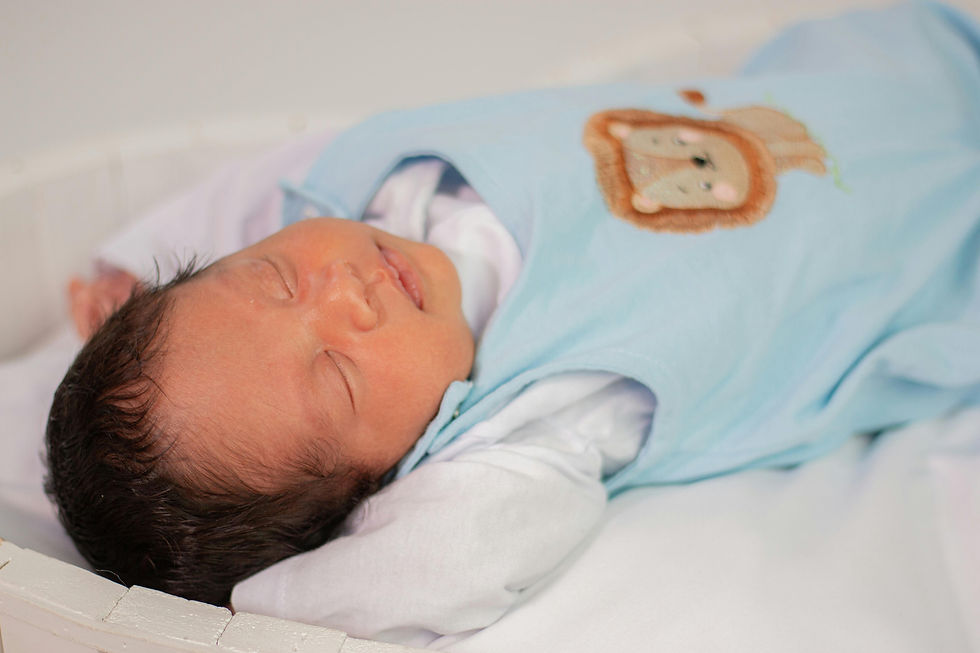
Here's the scenario parents are actually searching for help with in the middle of the night: you've just brought your baby home from the hospital. You place them flat on their back in the bassinet, exactly like the safe-sleep handout instructed. Within seconds — sometimes before you've even let go — they tip or curl onto one side. Their legs draw up, their body curves, and suddenly they’re not flat anymore.
This happens constantly, and the confusion is real. Parents aren't imagining things. Newborns really do curl to the side in those early days, and the gap between what happens in the hospital and what you're told to do at home can feel enormous. Before we talk about what's safe, let's define a few key terms:
Newborn curl: a temporary side-lean driven by newborn flexor tone and early reflexes. Your baby spent months curled in a tight ball in the womb, and that flexed posture lingers for days or weeks after birth.
Side-lying: being left to sleep on the side as a sleep position, unattended.
Developmental rolling: purposeful motor rolling that usually comes around four to six months, when a baby has the core strength and coordination to roll intentionally.
Swaddle-assisted side-rolling: when a baby ends up on their side because of swaddle tension, kicking, arching, or bassinet positioning rather than true milestone rolling.
These distinctions are important. A five-day-old who lands on their side is almost always showing posture and reflexes, not core-strength milestone rolling. They’re not trying to flip over; their body is just doing what newborn bodies do.
You may have also seen a nurse briefly place your baby on their side in the hospital for observation or spit-up monitoring. That supervised, clinical positioning happens in a monitored setting where staff are watching continuously. At home, the guidance is stricter because you don't have that same level of supervision. And that contrast is exactly why parents feel like they're getting mixed messages.

Is Newborn Rolling to the Side Safe? The Evidence-Based Answer
Let's start with the direct answer: no, side sleeping is not considered a safe sleep position for newborns. The American Academy of Pediatrics 2022 policy statement[1] makes this clear: infants should be placed supine (flat on the back) for every sleep. Side sleeping is specifically not advised because it's unstable and can lead to prone (stomach) positioning.
Here's the data point most articles skip: in a 2004 study by Carpenter and colleagues published in The Lancet, pooled case-control data from 20 European regions found that side sleeping had an adjusted odds ratio of 1.36 for SIDS[2] compared with supine sleep. Prone sleep had a far higher adjusted odds ratio of 13.1. In plain terms: side sleep is not a harmless middle ground between back and tummy. It carries its own measurable risk. Side-lying is unstable, and babies can roll from side to stomach far more easily than from back to stomach — especially when swaddled or in a snug sleep space.
Now let's talk about the reflux fear, because this is one of the biggest reasons parents intentionally choose side-lying. The worry makes complete sense; when your baby spits up constantly, side sleep looks safer. But here's what the research actually shows. Rachel Y. Moon, MD, FAAP[3] and AAP HealthyChildren guidance state clearly: back sleeping does not increase aspiration risk in healthy babies, including most with uncomplicated reflux. When a baby is on their back, the trachea sits on top of the esophagus, so spit-up has to defy gravity to enter the airway. Babies also have protective reflexes like coughing, turning the head, and swallowing that kick in when liquid comes up. Side-lying doesn't add a safety margin; it just adds positional instability.
Here's an important nuance many articles blur: the common advice that "if a baby gets there on their own you can leave them there" is meant for older babies with genuine rolling ability, especially those who can roll both ways. It does not cleanly apply to a very young newborn who side-rolls because of swaddling, strong newborn flexion, or a snug sleep space. This is not a baby who rolled on purpose using core strength and coordination.
Harvey Karp, MD[4] offers a more conservative framing that aligns with this reality: any sign of trying to roll should trigger a swaddle reassessment. If your three-week-old is ending up on their side in the swaddle — even if they’re not doing textbook developmental rolling — that's enough of a signal to stop swaddling and transition to a safer wearable blanket option.
One more distinction worth making: a brief side position during an awake, supervised contact nap or while settling a transfer is not the same as leaving a baby unattended to sleep on their side. In our approach, back is the sleep position we recommend. Side is only ever a temporary, supervised calming or transfer tool — not the final sleep setup. If you gently place your baby on their side for a moment to ease the startle reflex during a bassinet transfer and then roll them to their back once they’re settled, that's fine. What's not safe is walking away and leaving them to sleep unattended on their side, even if they look peaceful.
What to Do If Your Newborn Keeps Rolling to the Side
Start with the safe-sleep foundation: always place your newborn flat on their back on a firm, flat, empty sleep surface for every nap and nighttime sleep. That word empty matters more than you might think. No wedges. No positioners. No rolled blankets tucked along the sides. No loungers, no props, no "breathable" nest-style products marketed as safer alternatives. The AAP has issued specific warnings about infant sleep positioners precisely because worried parents are vulnerable to buying products that sound reassuring but actually add risk. If it props, angles, or cushions your baby in any way, it doesn't belong in the sleep space.
Now let's talk about the swaddle gray zone, because this is where many parents get stuck. Your baby may not be rolling in the milestone sense but keeps ending up on their side while swaddled — whether through tension, kicking, arching, or the way the fabric bunches in a snug bassinet. This counts. If the swaddle is helping your baby torque onto their side, that's enough reason to stop and transition rather than waiting for textbook developmental rolling. In The Peaceful Sleeper framework, swaddles should be used only for sleep, fit snugly without restricting hip movement, and be dropped once there are signs of rolling — and that includes this kind of side-torquing, even without a full back-to-belly flip.
So what do you do instead? Transition to an arms-out sleep sack and expect a short adjustment period. Your baby might startle more for a few nights. Sleep might feel messier for a bit. But most babies adapt faster than parents expect, and safe sleep always comes first.
Here's where our soothing philosophy makes this advice actually usable in real life. Many newborns side-curl more when they're overtired, startled by the Moro reflex, or unsettled after a transfer. The solution isn't to prop them on their side — it's to support them before they get to that frantic, flailing state. Use short wake windows: around 60 to 90 minutes for many young babies, sometimes even shorter in the first few weeks. Create a dark and calm sleep space. Use shushing or white noise. Offer a pacifier if that's part of your routine.
And here's the reassurance you might need to hear right now: you cannot spoil a newborn. If you need more rocking, more feeding, more contact naps while you sort out this swaddle transition, that is completely normal. Holding your baby is not a sleep crutch at this age, it's responsive caregiving.
If you're fully awake and holding your baby for a contact nap, a side-lying cuddle against your body may help calm the Moro reflex — and that's fine. But one critical condition must always be met: the baby does not remain sleeping unattended on their side. Contact naps are lovely and normal, but they require full adult wakefulness. The second you feel your eyes getting heavy, it's time to move your baby to the bassinet.
When Newborn Side-Rolling May Need a Closer Look
There's a meaningful difference between sometimes curls to the side and always ends up on the same side. That distinction matters, and it's worth paying attention to.
If your baby consistently flops left or right — not alternating between both sides — that pattern can be an asymmetry clue that deserves attention. The 2018 Pediatric Physical Therapy clinical practice guideline on congenital muscular torticollis by Kaplan, Coulter, and Fetters[5] offers the expert perspective most competing articles leave out. Congenital muscular torticollis is a condition where tightness in the neck muscle causes a persistent head tilt or turn preference, and it's more common than many parents realize. Here are the concrete signs to watch for:
Persistent head-turn preference: your baby consistently looks to one side and resists turning the other way
Difficulty turning the neck both ways : visible tension or crying when you gently guide the head to the non-preferred side
One-sided feeding problems: struggles latching on one breast or bottle side, frequent pulling off, or fussiness on the "hard" side
Flattening on one part of the head: a flat spot developing where your baby always rests
Poor tolerance for tummy time: arching, crying, or only pushing up on one side
Always curling to the same side in the bassinet: a predictable, one-directional pattern every single time
What makes this guideline especially useful is the data point on timing: earlier referral, including before one month when indicated, is associated with shorter treatment duration. If you're noticing these signs in your two-week-old, you don't need to wait until the two-month checkup to mention it. Speaking up early can mean faster resolution.
When you do bring it up with your pediatrician, come prepared with specific observations: Does your baby curl to one side only or alternate? Does the same preference show up during feeding and awake time? Is there visible head flattening? These concrete details turn your concern into actionable information your doctor can actually use.
Beyond positional preference, frequent choking episodes beyond normal spit-up, noisy breathing with color change, poor weight gain, or a baby who seems genuinely uncomfortable lying flat despite standard reflux measures all deserve a pediatrician's input.
Here's the bottom line: most cases of early side-curling are common and not a sign that something is terribly wrong. Newborns curl. They flop. They do weird, floppy things that make new parents panic at 3 a.m. But safe sleep habits still matter right away, and paying attention to patterns — especially one-sided patterns — can catch small issues before they become bigger ones.
To recap: Baby is on their back for every sleep, reassess the swaddle if side-rolling is happening, and speak up early if your baby always favors one side. One step at a time — you've got this!
Sources
American Academy of Pediatrics. (2022). Policy statement on safe sleep recommendations.
Carpenter, R. (2004). The Lancet study on side sleeping and SIDS.
Moon, R. Y. (2022). AAP HealthyChildren guidance on back sleeping and aspiration risk.
Karp, H. (2021). Guidance on swaddling and signs of rolling.
Kaplan, S. (2018). Pediatric Physical Therapy clinical practice guideline on congenital muscular torticollis.



Comments