.png)
How Much Sleep Does My Baby Need by Age? Newborn to Toddler Sleep Guide

One of the biggest challenges with trying to figure out "how much sleep does my baby need" is that the rules seem to change just when you've figured them out.
One month your baby needs four naps, and the next they're suddenly fighting that last nap like it's their full-time job.
Here's the good news: while every baby has their own unique sleep needs, understanding typical sleep requirements by age can make a HUGE difference.
Let's break down exactly how much sleep newborns, babies, and toddlers generally need, what their nap schedules might look like, and how to know if YOUR baby is getting enough sleep.
How Much Sleep Does My Baby Need by Age?
The amount of sleep your baby needs gradually decreases as they grow. And remember, we're talking about total sleep over 24 hours, including daytime naps AND nighttime sleep.
Newborns (0–3 months): 14–17 hours
Babies (4–12 months): 12–16 hours
Toddlers (12–24 months): 11–14 hours
Toddlers (24–36 months): 11–14 hours
Preschoolers (3–5 years): 10–13 hours
These are guidelines, not rigid rules. Some babies naturally need more sleep, while others function beautifully toward the lower end of the range.
At The Peaceful Sleeper, I always encourage parents to look at the whole picture rather than obsessing over an exact number.
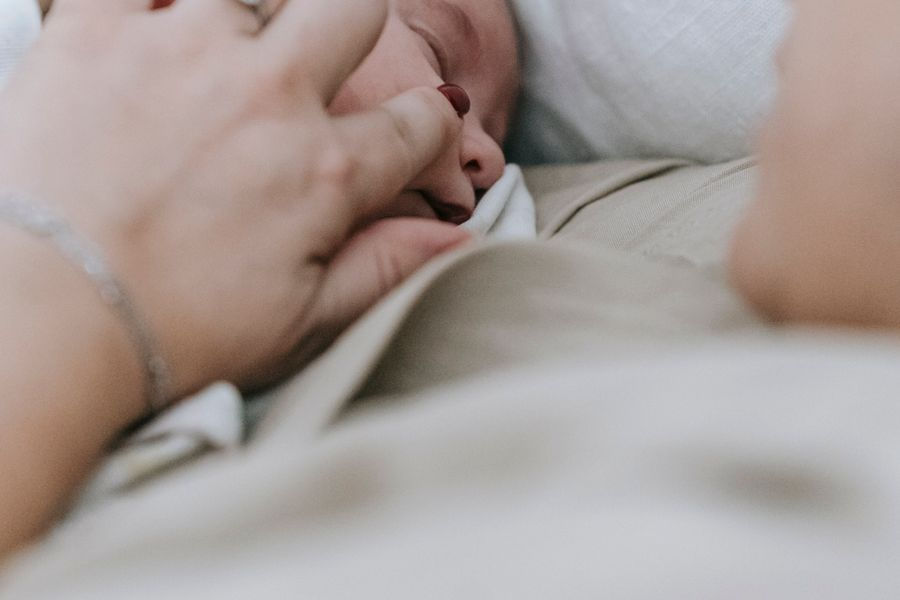
Newborn Sleep Needs: 0–3 Months
Newborns need approximately 14–17 hours of sleep in a 24-hour period, but that sleep usually happens in short stretches.[1]
Their little bodies are still developing a day-night rhythm, and frequent waking for feedings is completely normal.
Typical newborn sleep patterns include:
Naps: Often 4–7 or more per day
Wake windows: Roughly 30–90 minutes, depending on age
Nighttime sleep: Broken into shorter stretches for feedings
Rather than following a strict schedule, focus on complete feedings, short wake windows, and recognizing your baby's early sleepy cues.
If you're in the newborn trenches, my 6-week-old sleep schedule is a great place to start.
And if you want guidance that grows with your baby, sign up for my FREE Newborn Sleep Guide and age-based email tips.
Baby Sleep Needs: 4–6 Months
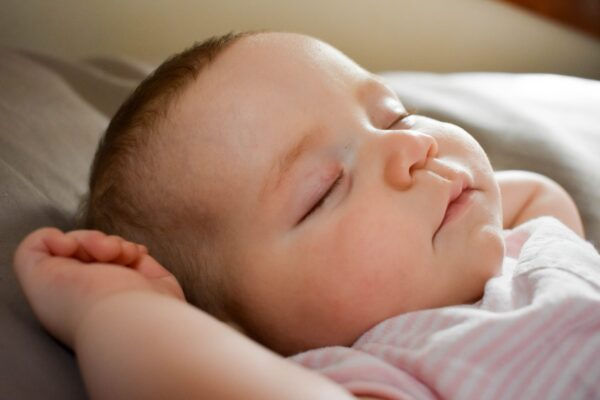
Around 4 months, babies begin developing more organized sleep cycles.[3] This can bring longer stretches of nighttime sleep, but it can also temporarily make sleep feel a little chaotic.
At this age, babies generally need 12–16 hours of total sleep, including naps.[2]
Typical patterns include:
Naps: About 3–4 per day
Wake windows: Approximately 1.5–2.5 hours
Nighttime sleep: Often around 10–12 hours, potentially interrupted by feedings
This is also when many families notice the famous 4-month sleep regression.
If your previously wonderful sleeper suddenly starts waking more frequently, check out my guide to the 4-month sleep regression.
Remember, developing independent sleep skills doesn't mean ignoring your baby's needs. It's about finding a responsive approach that works for your family.
Baby Sleep Needs: 7–9 Months
By 7–9 months, many babies settle into a more predictable routine.
They still generally need 12–16 hours of total daily sleep, but that sleep is often distributed across two naps and a longer nighttime stretch.[2]
Typical patterns include:
Naps: Usually 2 per day
Wake windows: Approximately 2.5–3.5 hours
Daytime sleep: Often 2–3.5 hours
Nighttime sleep: Commonly 10–12 hours
This age can bring exciting developmental changes, including crawling, sitting, and increased awareness of their surroundings.
If naps suddenly become challenging, make sure you're not trying to force a schedule your baby has outgrown.
My guide on when babies are ready to drop to two naps can help.
Baby Sleep Needs: 10–12 Months
At 10–12 months, most babies are still taking two naps and need approximately 12–16 hours of sleep over 24 hours.[2]
A typical schedule might include:
Morning nap: 1–1.5 hours
Afternoon nap: 1–1.5 hours
Nighttime sleep: Approximately 10–12 hours
Some babies begin resisting a nap around their first birthday, but that doesn't necessarily mean they're ready to drop it.
Before making a big schedule change, evaluate their wake windows, nap lengths, and bedtime.
You can find more specific recommendations in my 10-month-old sleep schedule guide.
Toddler Sleep Needs: 12–18 Months
Welcome to toddlerhood, where your child has BIG opinions about practically everything, including sleep!
Between 12 and 18 months, toddlers typically need 11–14 hours of total sleep.[2]
Many transition from two naps to one during this period, although the exact timing varies.
Typical patterns include:
Naps: 1–2 per day
Daytime sleep: Approximately 2–3 hours
Nighttime sleep: Commonly 10–12 hours
One of the biggest mistakes I see is dropping the second nap before a toddler is developmentally ready.
If you're wondering whether it's time, read my guide on transitioning to one nap.
Toddler Sleep Needs: 18–36 Months
Between 18 months and 3 years, toddlers still generally need 11–14 hours of total daily sleep, including naps.[2]
Most toddlers this age follow a schedule with one afternoon nap.
Typical patterns include:
Naps: Usually 1 per day
Nap duration: Approximately 1–3 hours
Nighttime sleep: Often 10–12 hours
Bedtime resistance, separation anxiety, and newfound independence can make this stage especially interesting.
Consistency becomes incredibly helpful here.
A predictable bedtime routine gives your toddler a sense of security and helps them understand what's coming next.
If your toddler is starting to fight sleep, try incorporating a bedtime routine visual schedule.

How Can I Help My Baby Get the Sleep They Need?
Knowing how much sleep your baby needs is only half the equation. Helping them actually GET that sleep is where things can become tricky.
Here are five things I recommend:
Watch wake windows. Staying awake too long can make it harder for some babies to settle.
Pay attention to sleepy cues. Zoning out, decreased activity, and subtle fussiness may tell you it's time for sleep.
Prioritize daytime naps. Skipping naps doesn't necessarily lead to better nighttime sleep.
Create a consistent routine. Predictable sleep cues help your baby know what to expect.
Adjust for YOUR baby. Sleep schedules are starting points, not commandments.
Not sure whether your baby needs more or less awake time? My guide to overtired versus undertired babies can help you troubleshoot.
You can also join my free baby sleep email series for practical tips that change as your baby grows.
For babies under 12 months, always follow safe-sleep guidelines: place them on their backs on a firm, flat sleep surface with no loose bedding or soft objects.[4]
Frequently Asked Questions About Baby Sleep Needs
What Is the Hardest Age for Baby Sleep?
There isn't one universally hardest age, but the newborn stage and around 4 months are especially challenging for many families.
Newborns wake frequently to feed, while babies around 4 months undergo changes in sleep organization.[3]
Later nap transitions and toddler independence can introduce new challenges.
Is It Okay for a Baby to Sleep All Day?
Newborns sleep A LOT, and that's normal. However, they still need regular feedings and opportunities to interact when awake.
If your newborn is difficult to wake, unusually sleepy, feeding poorly, or having fewer wet diapers, contact your pediatrician promptly.
For healthy older babies, look at total sleep over 24 hours rather than one unusually sleepy afternoon. If excessive sleepiness is persistent or concerning, check with your pediatrician.
How Much Sleep Does My Baby Need? Focus on YOUR Baby
If there's one thing I want you to remember, it's this: your baby's sleep needs will change, and that's completely normal.
Use age-based recommendations as your foundation, then adjust based on your baby's temperament, development, feeding needs, and sleep patterns.
The goal isn't to follow a perfect schedule every single day. It's to help your baby get the restorative sleep they need while creating routines that work for your whole family.
And you don't have to figure it all out yourself!
Sign up for my FREE Newborn Sleep Guide and age-based email series, and I'll send helpful sleep tips straight to your inbox as your baby grows.
Sources & Footnotes
Centers for Disease Control and Prevention: About Sleep — Recommended sleep duration by age, including newborns.
American Academy of Sleep Medicine: Recommended Amount of Sleep for Pediatric Populations — Evidence-based sleep recommendations for infants, toddlers, and children.
American Academy of Pediatrics: Getting Your Baby to Sleep — Development of infant sleep cycles and guidance for improving sleep.
American Academy of Pediatrics: How to Keep Your Sleeping Baby Safe — Safe-sleep recommendations for infants.


Comments